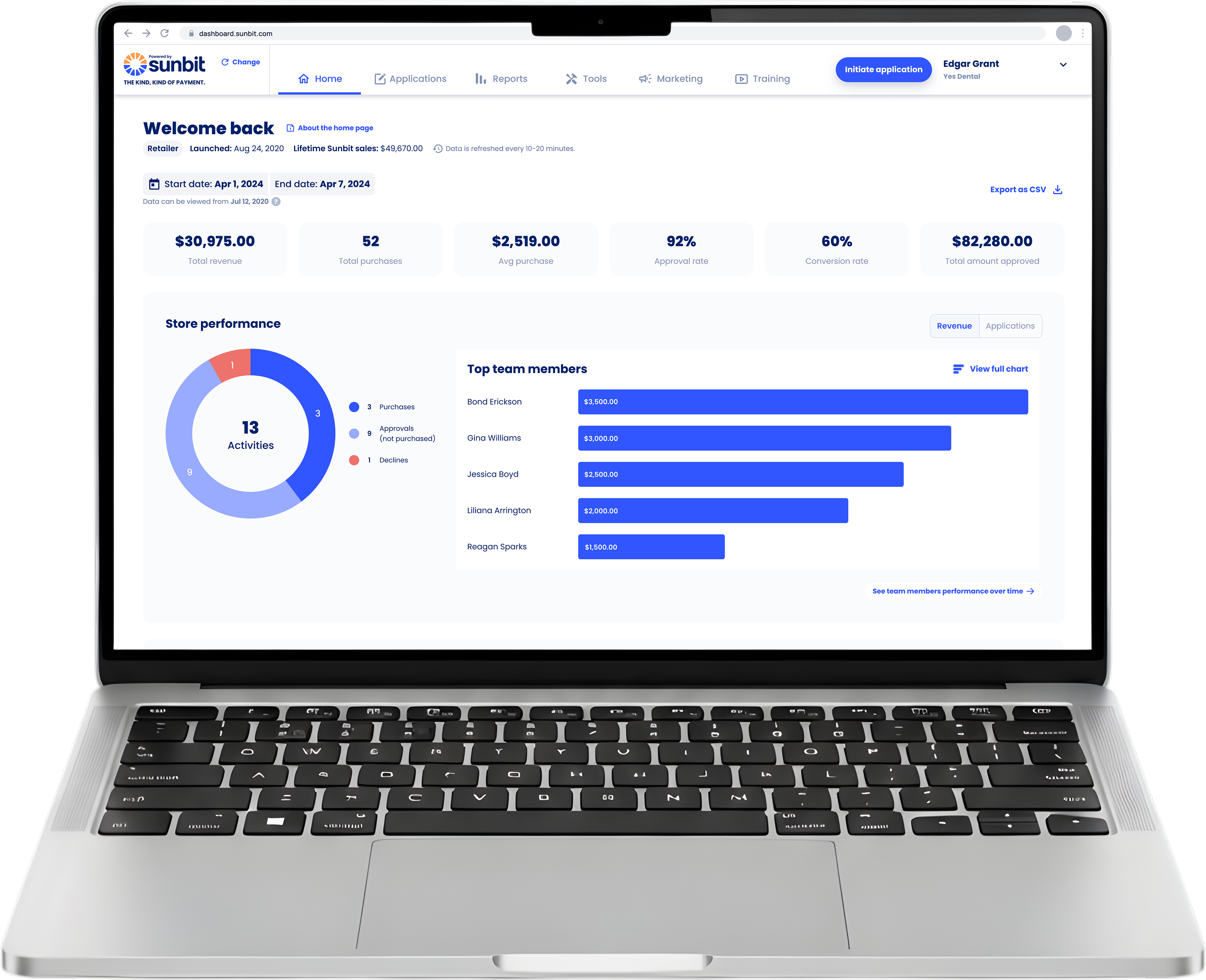
The Sunbit Business Dashboard

From flat data to structured visibility

Years 2022-Ongoing

Fintech

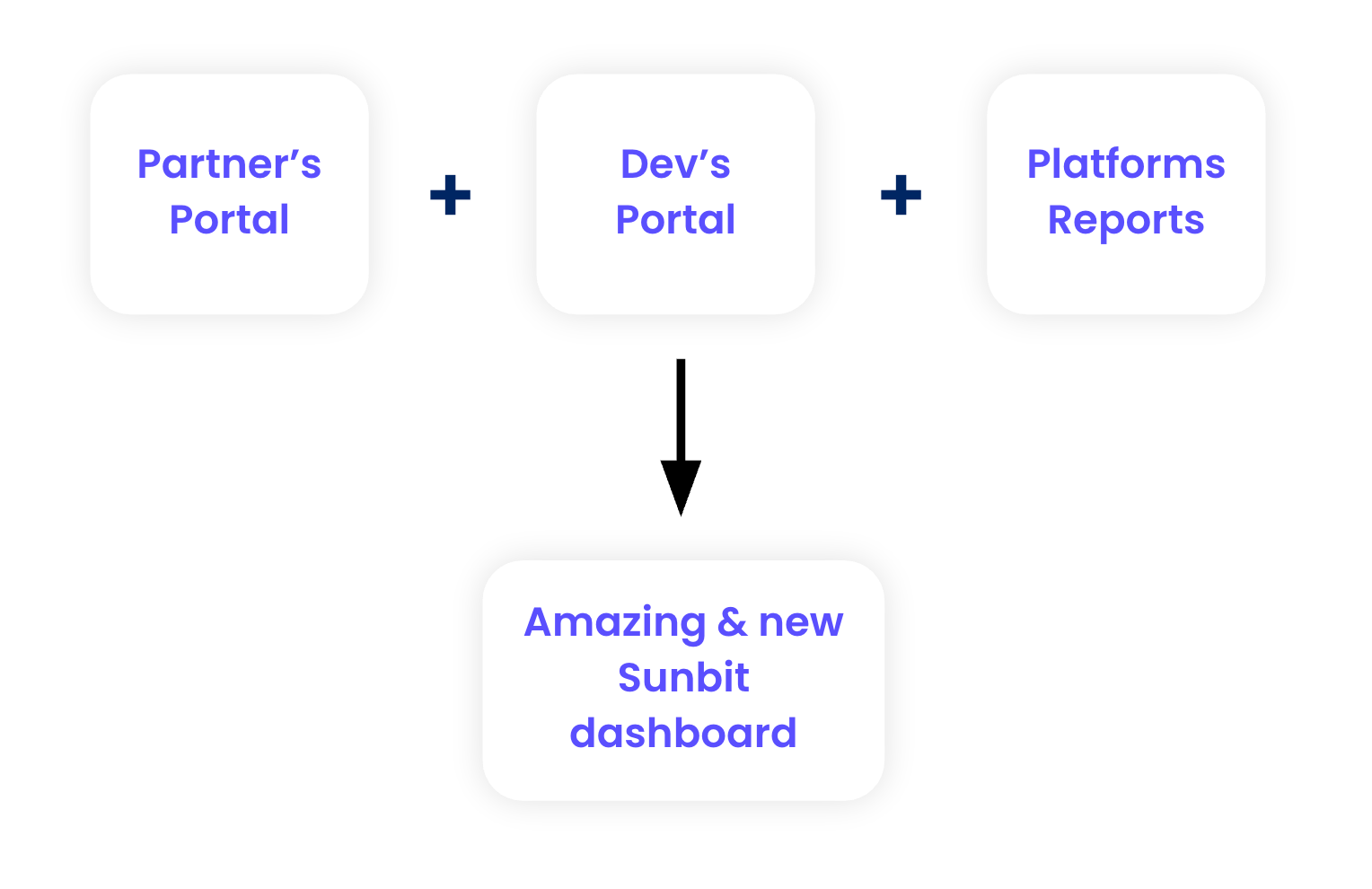
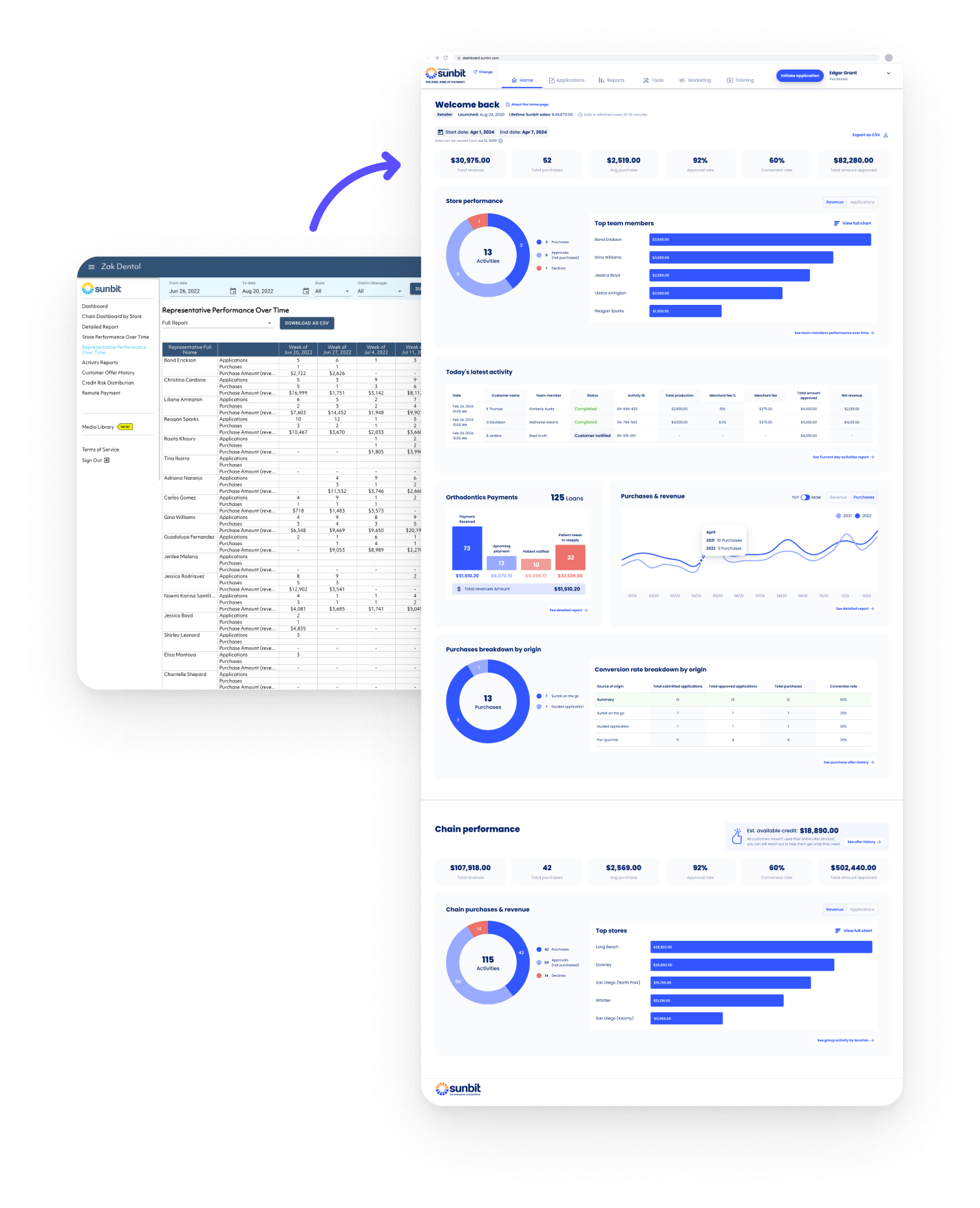
At Sunbit, I led the redesign of the Partner Dashboard to replace a fragmented, outdated system with a scalable, self-serve platform for both merchant and platform partners.

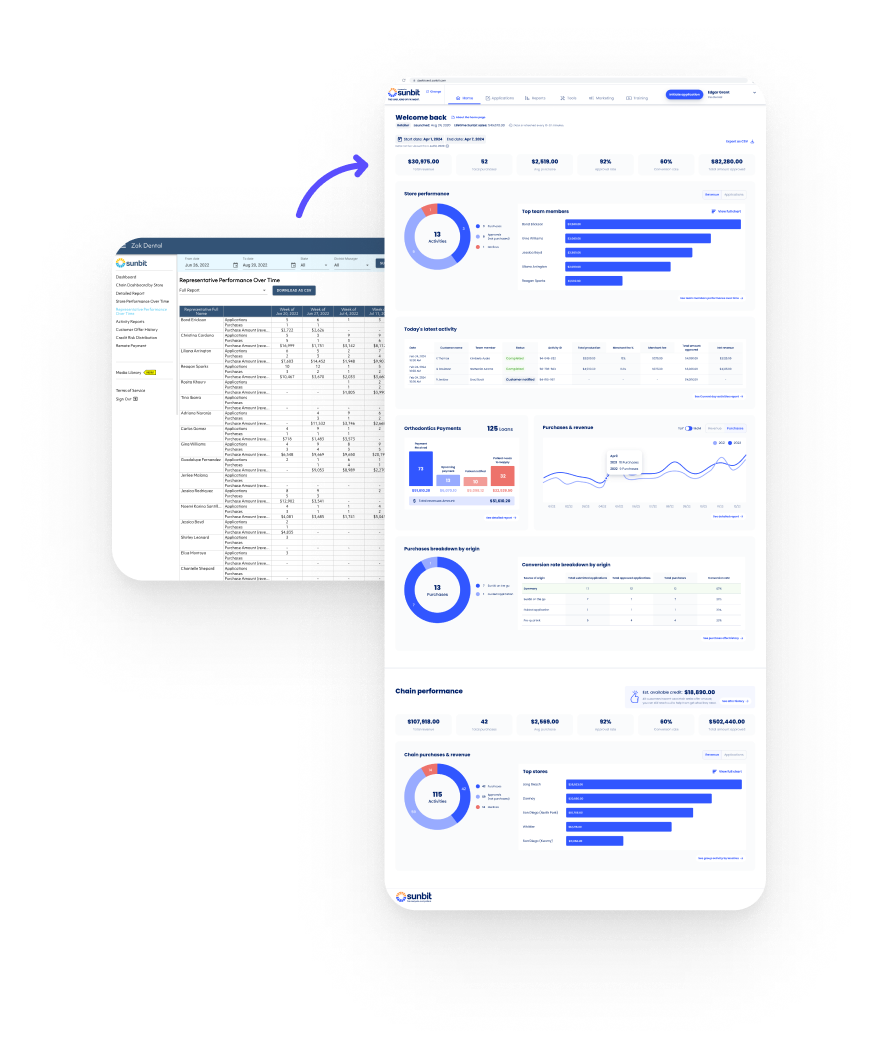
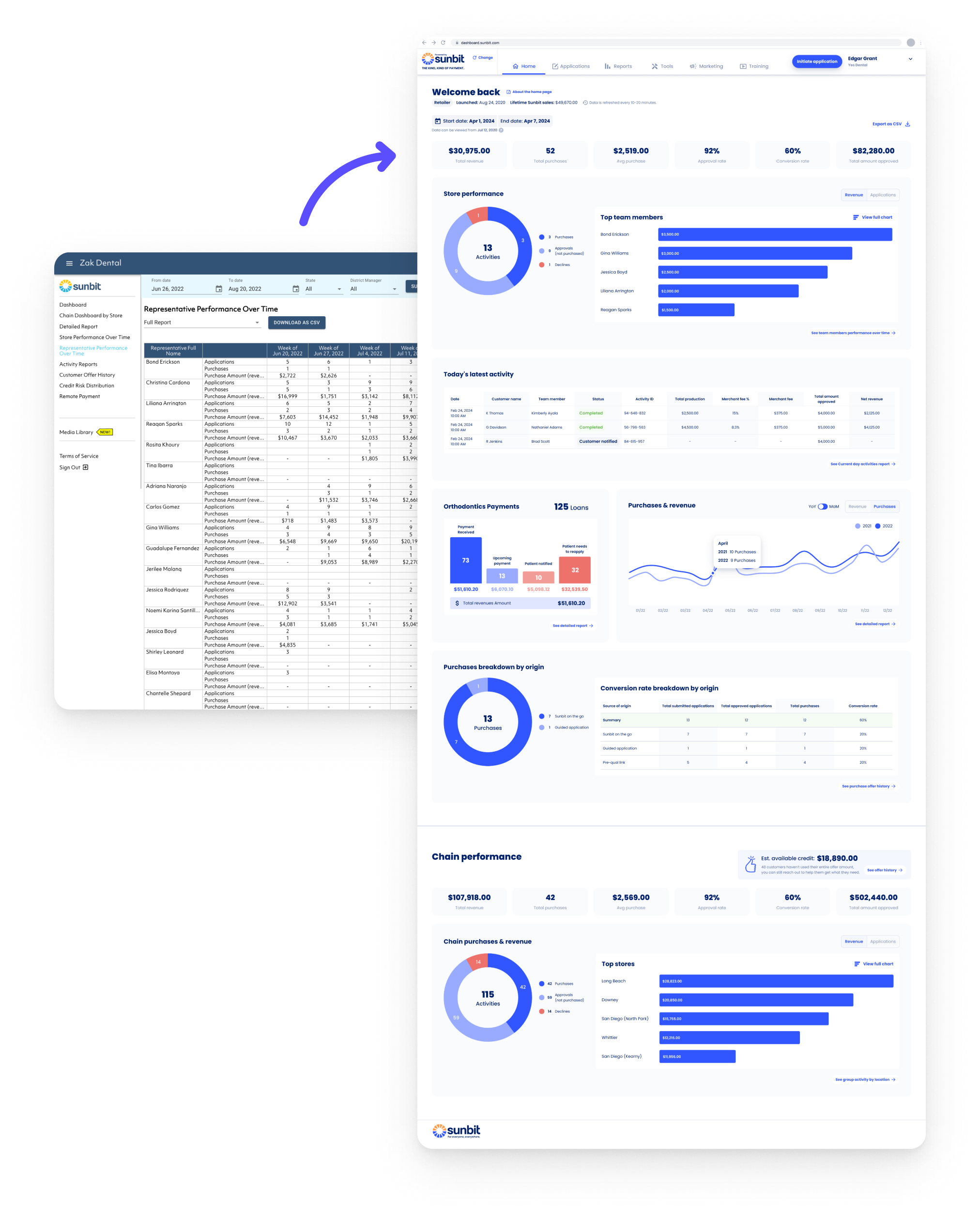
The original dashboard was dense and table-driven. Users had to scan raw data with no hierarchy or visual prioritization.

As the partner ecosystem expanded, this approach stopped scaling.

Landing detail

The process

We started with a discovery phase, interviewing ~65 partner businesses, reviewing their daily workflows, and collecting feedback from internal

support teams.

That insight shaped a very clear direction:

  • Simplify reporting
  • Make data actionable
  • Give users control
Product detail

Then came the define and design phases.

Building out dashboards, tables, and filters that didn’t just look better but worked smarter. Each component was built using Sunbit’s design system to ensure consistency and faster developer handoff. Throughout, I partnered closely with PMs and engineering to validate feasibility and refine details before final handoff.

Structural Shift: Layered Homepage

Building out dashboards, tables, and filters that didn’t just look better but worked smarter. Each component was built using Sunbit’s design system to ensure consistency and faster developer handoff. Throughout, I partnered closely with PMs and engineering to validate feasibility and refine details before final handoff.

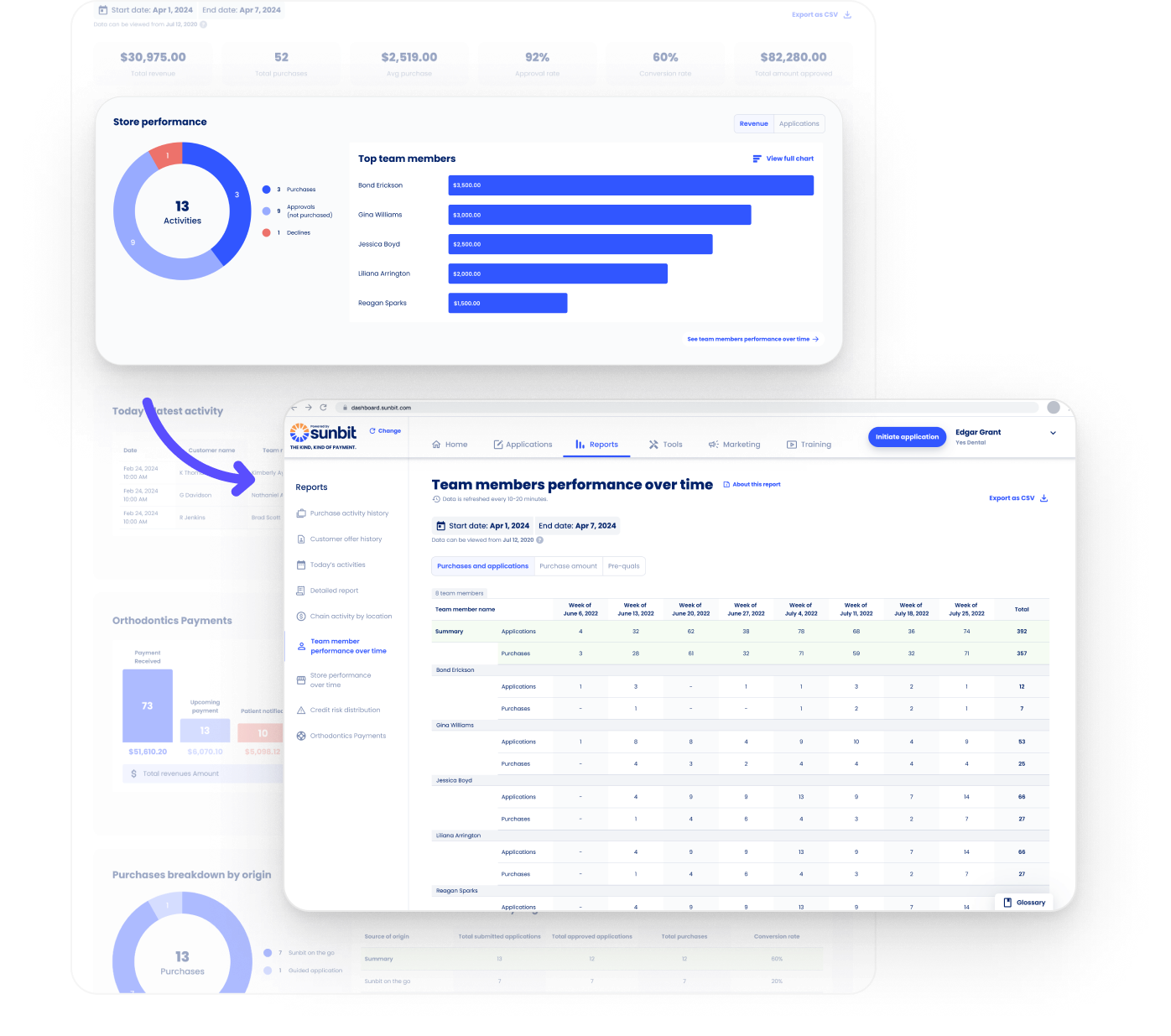
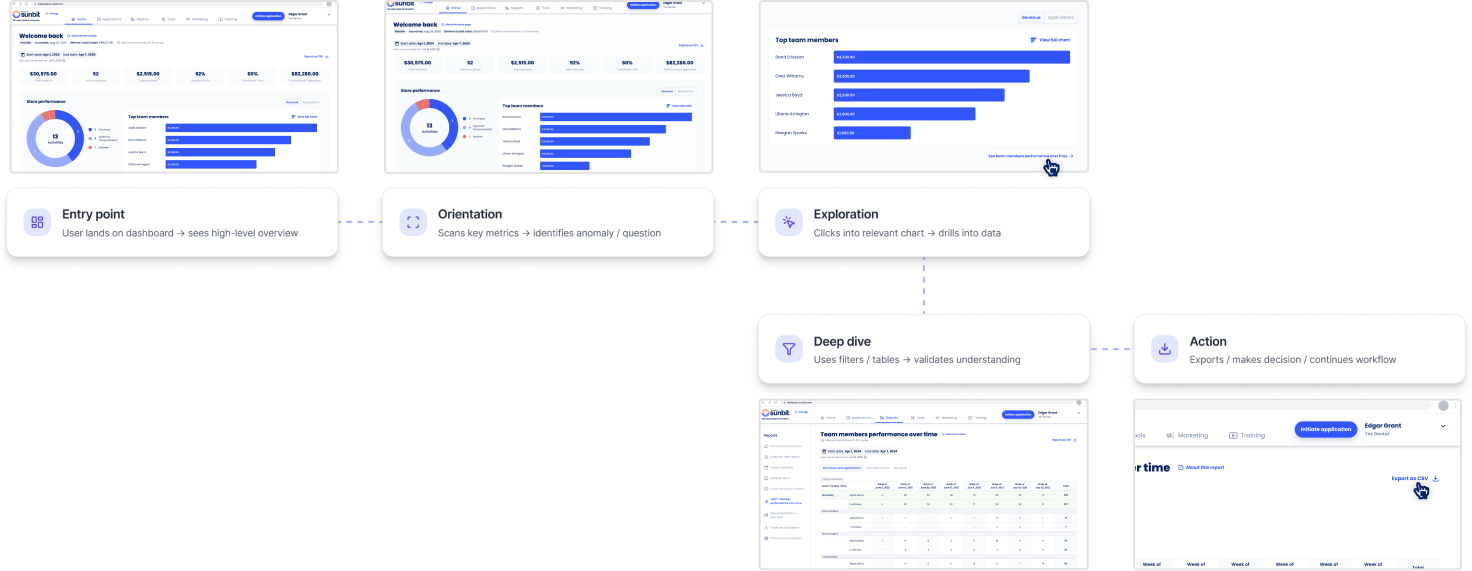
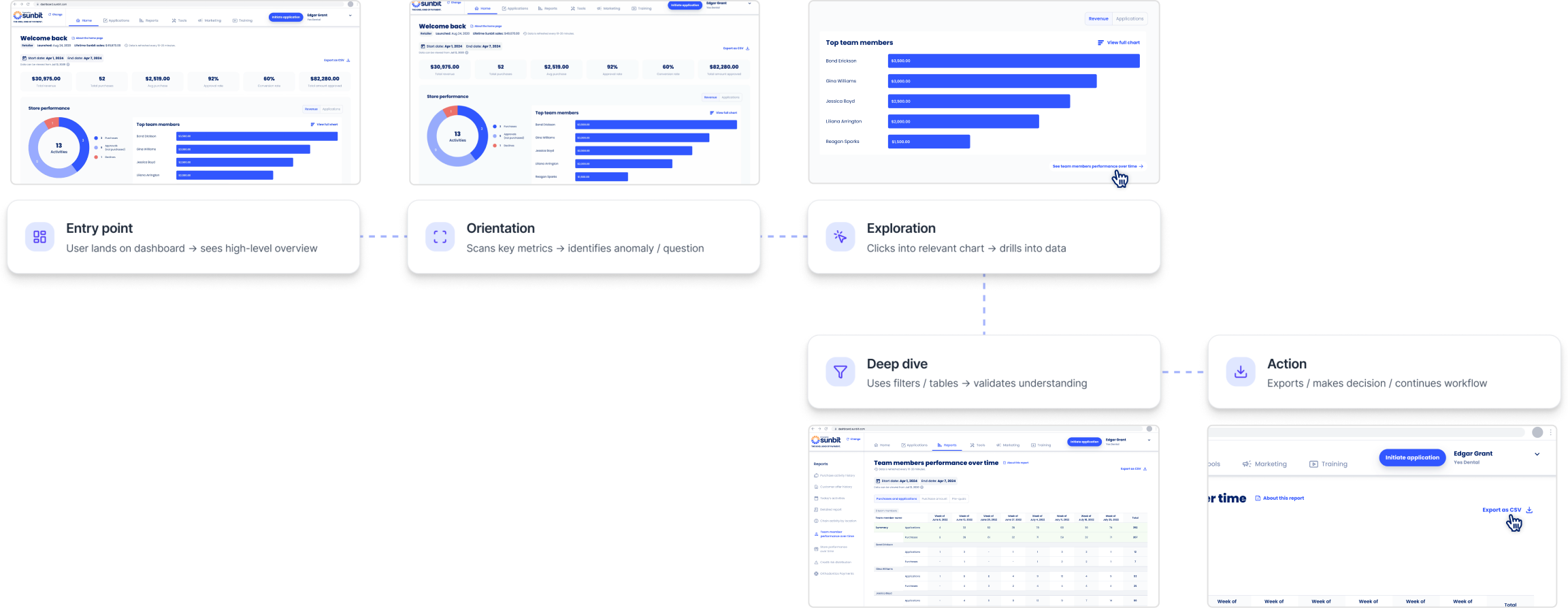
User Flow: From Question to Insight

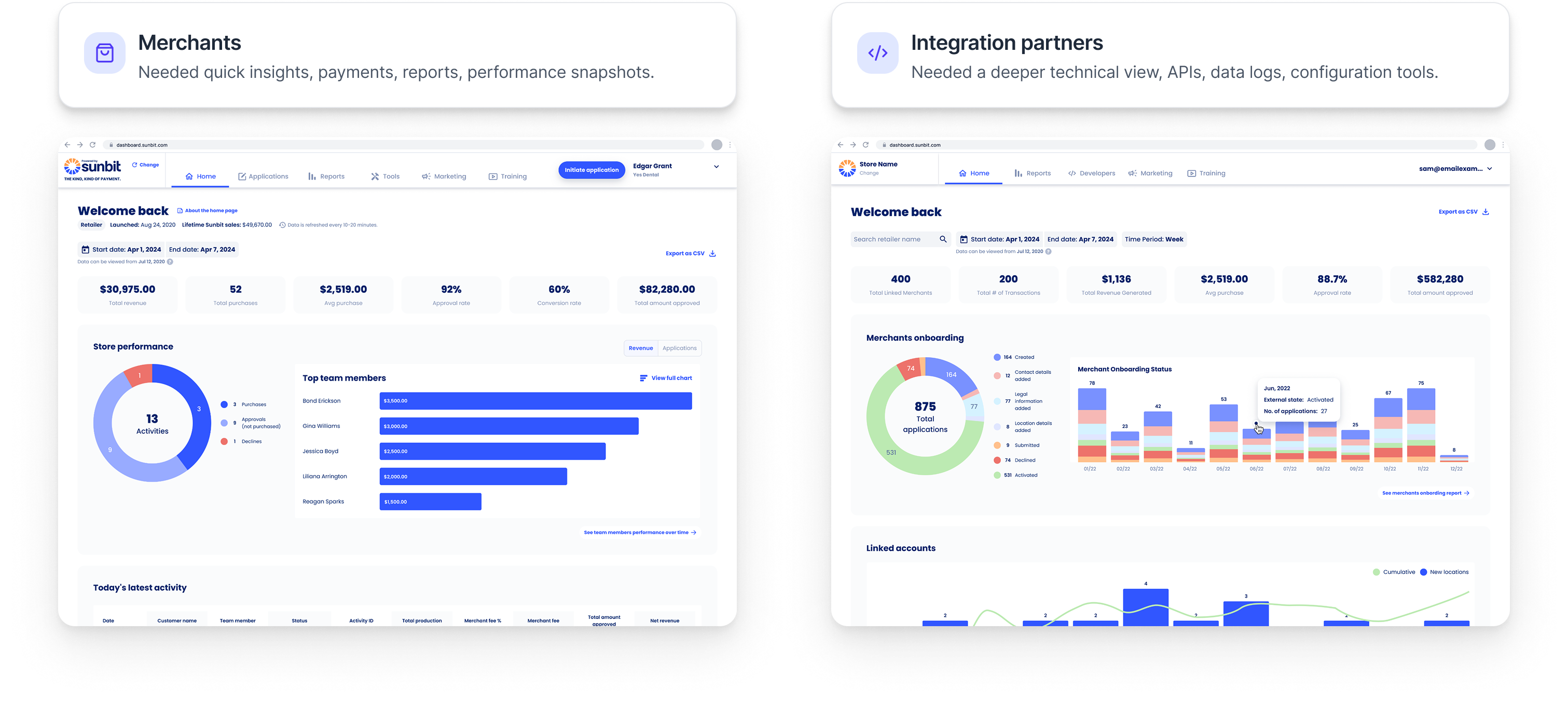
Designing for two worlds

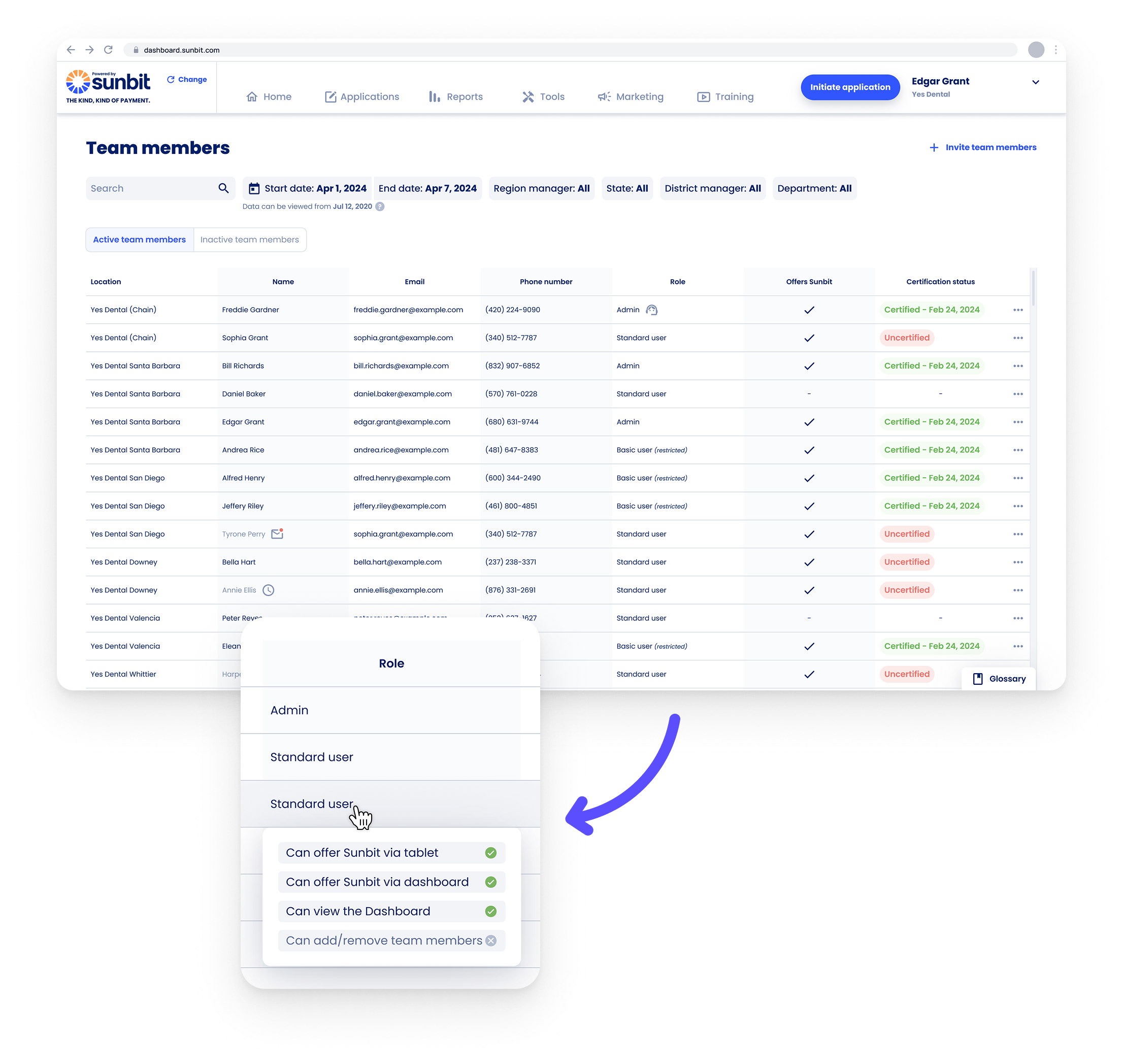
I created a shared architecture with adaptive layers based on role logic. Same foundation. Different surface complexity.

Instead of separating the experiences, I designed a role-based system that adapts to each user.

Same product, tailored views.

The focus was helping users get to what they came for faster. I mapped key tasks, restructured the information architecture, and built modular components that allow the dashboard to scale as new features are added.

Designing for two worlds

I created a shared architecture with adaptive layers based on role logic. Same foundation. Different surface complexity.

Why this metters

When information architecture is layered correctly, users don’t feel the system’s complexity, they see things clearly.

Next Project

Email

tali.k.design@gmail.com

Phone number

+972 50 2300121

Website

tali.design

LinkedIn

/talikivilevitz

© 2025 · All rights reserved

The Sunbit Business Dashboard

From flat data to structured visibility

Years 2022-Ongoing

Fintech

At Sunbit, I led the redesign of the Partner Dashboard to replace a fragmented, outdated system with a scalable, self-serve platform for both merchant and platform partners.

The original dashboard was dense and table-driven. Users had to scan raw data with no hierarchy or visual prioritization.

As the partner ecosystem expanded, this approach stopped scaling.

Landing detail

The process

We started with a discovery phase, interviewing ~65 partner businesses, reviewing their daily workflows, and collecting feedback from internal

support teams.

That insight shaped a very clear direction:

  • Simplify reporting
  • Make data actionable
  • Give users control
Product detail

Then came the define and design phases.

Building out dashboards, tables, and filters that didn’t just look better but worked smarter. Each component was built using Sunbit’s design system to ensure consistency and faster developer handoff. Throughout, I partnered closely with PMs and engineering to validate feasibility and refine details before final handoff.

Structural Shift: Layered Homepage

Building out dashboards, tables, and filters that didn’t just look better but worked smarter. Each component was built using Sunbit’s design system to ensure consistency and faster developer handoff. Throughout, I partnered closely with PMs and engineering to validate feasibility and refine details before final handoff.

User Flow: From Question to Insight

Designing for two worlds

I created a shared architecture with adaptive layers based on role logic. Same foundation. Different surface complexity.

Instead of separating the experiences, I designed a role-based system that adapts to each user.

Same product, tailored views.

The focus was helping users get to what they came for faster. I mapped key tasks, restructured the information architecture, and built modular components that allow the dashboard to scale as new features are added.

Designing for two worlds

I created a shared architecture with adaptive layers based on role logic. Same foundation. Different surface complexity.

Why this metters

When information architecture is layered correctly, users don’t feel the system’s complexity, they see things clearly.

Next Project

Email

tali.k.design@gmail.com

Phone number

+972 50 2300121

Website

tali.design

LinkedIn

/talikivilevitz

© 2026 · All rights reserved

The Sunbit Business Dashboard

From flat data to structured visibility

2022 - Ongoing

Fintech

At Sunbit, I led the redesign of the Partner Dashboard to replace a fragmented, outdated system with a scalable, self-serve platform for both merchant and platform partners.

The original dashboard was dense and table-driven. Users had to scan raw data with no hierarchy or visual prioritization.

As the partner ecosystem expanded, this approach stopped scaling.

Landing detail

The process

We started with a discovery phase, interviewing ~65 partner businesses, reviewing their daily workflows, and collecting feedback from internal

support teams.

That insight shaped a very clear direction:

  • Simplify reporting
  • Make data actionable
  • Give users control
Product detail

Then came the define and design phases.

Building out dashboards, tables, and filters that didn’t just look better but worked smarter. Each component was built using Sunbit’s design system to ensure consistency and faster developer handoff. Throughout, I partnered closely with PMs and engineering to validate feasibility and refine details before final handoff.

Structural Shift: Layered Homepage

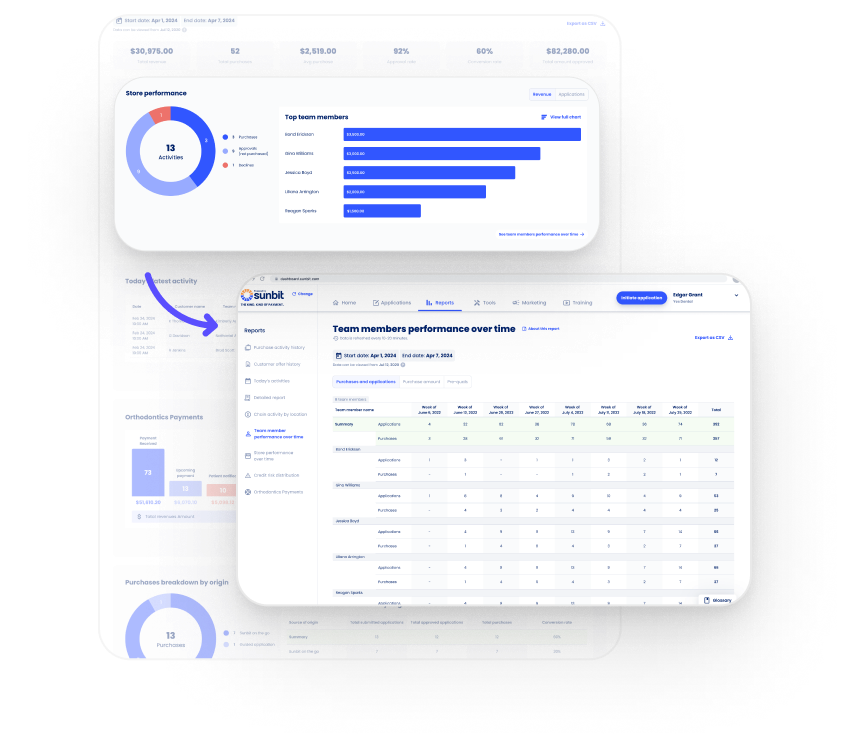
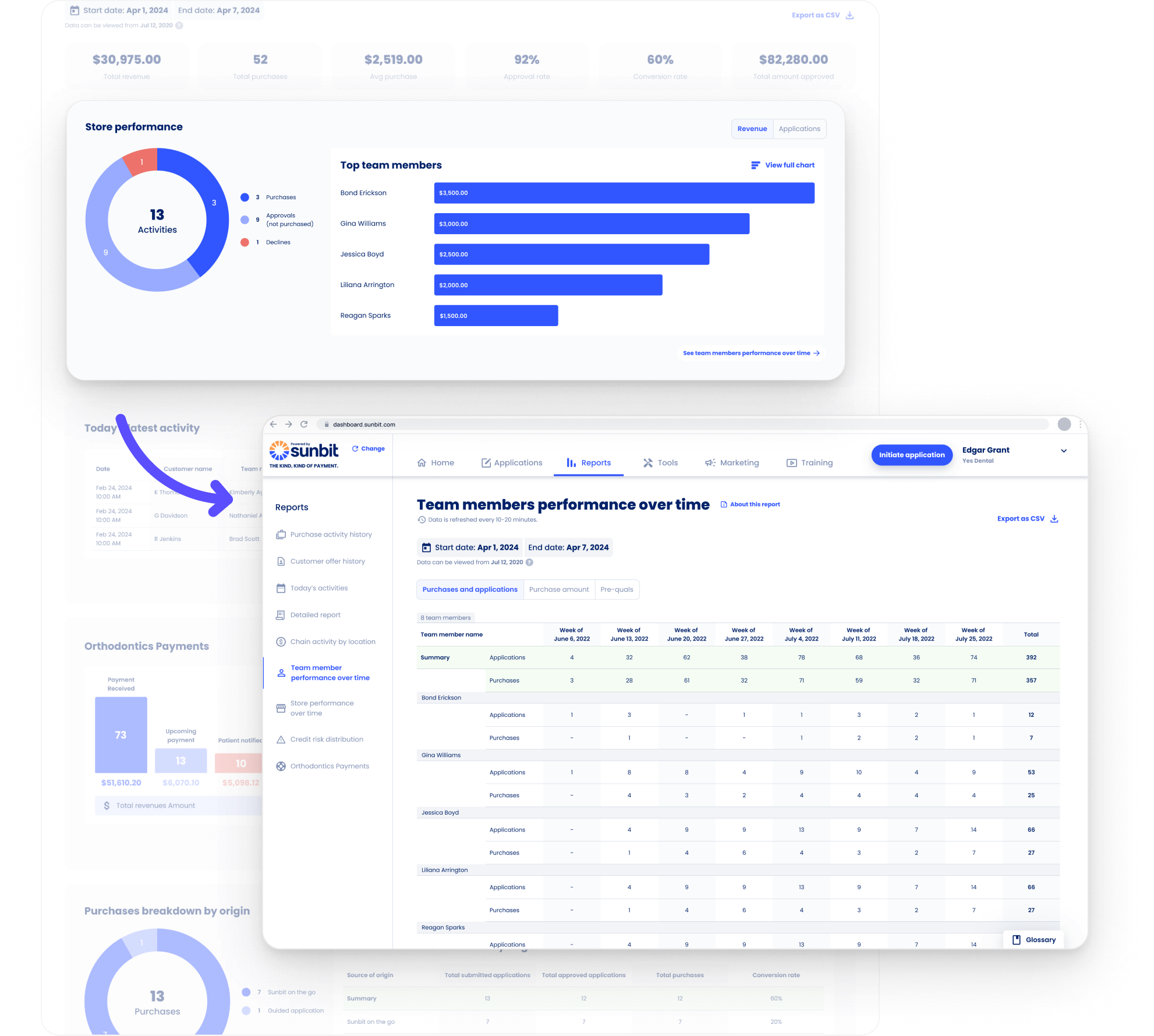
I redes igned the dashboard around a visual homepage that surfaces key insights first, using charts as structured entry points. Users can drill into each graph to reveal the full underlying dataset, filters, and reporting tables. Overview when you need direction. Depth when you need control.

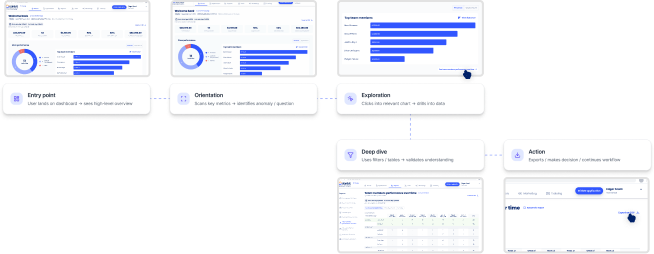
User Flow: From Question to Insight

Designing for two worlds

I created a shared architecture with adaptive layers based on role logic. Same foundation. Different surface complexity.

Instead of separating the experiences, I designed a role-based system that adapts to each user.

Same product, tailored views.

The focus was helping users get to what they came for faster. I mapped key tasks, restructured the information architecture, and built modular components that allow the dashboard to scale as new features are added.

The impact

There was a significant drop in support tickets.Clarity became infrastructure.

Why this metters

When information architecture is layered correctly, users don’t feel the system’s complexity, they see things clearly.

Next Project